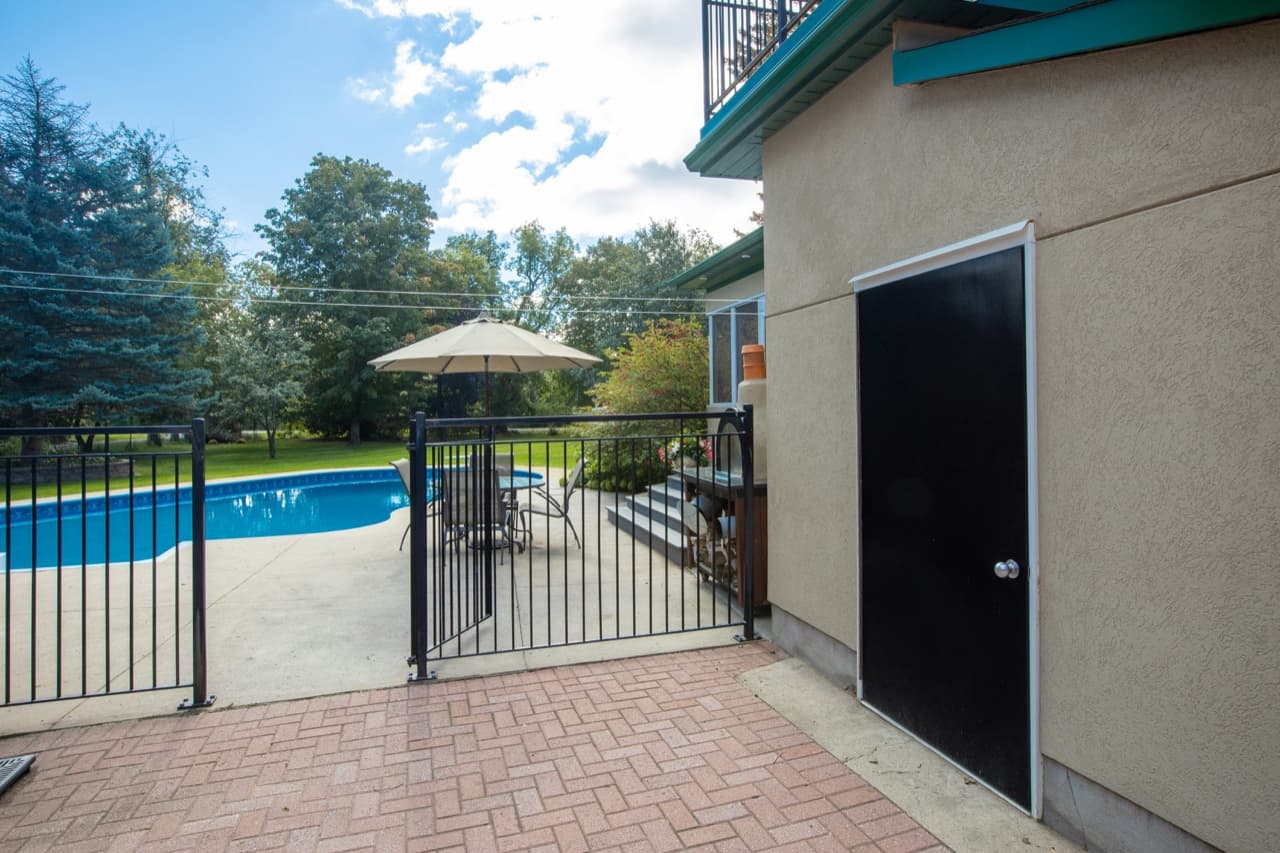
NJ pool fence code requirements: what every pool owner must know
NJ law requires a code-compliant barrier around every in-ground pool, and the rules are specific enough that many pool fences built more than fifteen years ago no longer meet current code. This guide covers what NJ pool barrier code actually requires, what your fence options are, what fails inspection most often, when fence work becomes urgent (especially around real-estate sales), and how town inspectors check compliance.
Whether you're installing a fence around a new pool, replacing one that failed inspection, or verifying an existing fence before listing your home, the same set of rules apply. This is the long version of those rules in plain English.
This is the long companion to our Pool Fence Installation service page.
Why NJ requires pool fencing by law
In-ground pools in New Jersey are required to be surrounded by a code-compliant barrier. The rule comes from the International Residential Code (IRC), which NJ has adopted as part of the state Uniform Construction Code. The intent is straightforward. Prevent unattended access to the pool, especially by children. Drowning is the leading cause of accidental death for children ages 1 to 4 in the United States, and most residential pool drownings involve a child accessing the pool without a parent present.
That's why the code is specific. Height, spacing, gates, latch position, climbable features. Every rule exists to address a specific failure mode. The code isn't written abstractly. It's written to close the gaps that real accidents have come through.
What the code actually says
The basics every Union County pool owner should know:
- Minimum height, 48 inches. measured from grade (the ground level outside the fence). Some configurations require taller in specific situations, but 48 inches is the floor.
- Maximum gap below the fence, 4 inches. the space between the bottom of the fence and the ground cannot exceed 4 inches. This rules out fences that sit too high above the grass or that have a noticeable gap from settling over time.
- Vertical-member spacing. must prevent a 4-inch sphere from passing through. Picket spacing, mesh gaps, and any opening in the fence have to meet this standard.
- Gates. self-closing and self-latching. When you let go of the gate, it has to swing closed on its own and latch automatically.
- Gate latch position, at least 54 inches above grade. latches have to be high enough that a small child can't reach them from the outside.
- No climbable features on the pool side of the fence. horizontal rails, decorative ornaments, attached planters, and outdoor furniture too close to the fence can all create climbable footholds.
The two materials that dominate Union County pool fence work
Most pool fences in Union County fall into one of two categories: permanent ornamental aluminum, or removable mesh. Both meet NJ code when installed correctly.
Permanent powder-coated aluminum is the most common pool fence material in the county. Vertical-bar design hits the 4-inch-sphere spacing rule naturally. Black, bronze, or white powder-coat finish. 30+ year lifespan with effectively no maintenance after install. It's a year-round fence that frames the pool area visually.
Removable mesh is polyester mesh stretched between aluminum posts that drop into ground sleeves. NJ-code-compliant when installed correctly. The advantage is removability. Posts come out when the pool is closed, sleeves stay flush with the deck or grass, and the pool area opens up off-season. Common with families who don't want a year-round visual barrier.
Less common but possible: an integrated property fence. Certain configurations of vinyl picket or aluminum can do double duty as both property fence and pool barrier. The geometry has to work, the gate hardware has to meet code on its own, and any climbable features near the fence on the pool side need to go. When it works, it's a clean solution. When it doesn't, you end up with two fences rather than one.
The five violations that come up most
Five problems that show up over and over on existing pool fences:
- Self-closing gate hardware that's stopped working. spring loses tension, hinge gets stuck, gate stops returning on its own. The single most common pool fence violation, and the cheapest to fix.
- Latch height too low. older fences sometimes have latches positioned where convenience put them rather than where code requires. A latch below 54 inches above grade is a violation regardless of how well it works.
- A gap that grew over time. frost-thaw cycles and lawn settling push the ground down around the fence over the seasons. A fence that started at the maximum 4-inch gap can grow to 5 or 6 inches after a few years.
- Climbable features near the fence. new landscaping, a planter, or a pool chair stored too close to the fence on the pool side. Anything that gives a child a step up creates a violation, even if the fence itself is unchanged.
- Picket spacing that doesn't meet the 4-inch rule. mostly an issue with old picket fences not built to current code. Sometimes also an issue with custom wood designs where the original installer didn't apply the pool spacing rule.
The four scenarios that usually drive this work
New pool installation, real-estate sale, code update, and new ownership are the four moments when pool fence work comes up. They look different, but the rules are the same.
- New pool installation. pool builders rarely include the fence in the pool quote. The fence is its own project, on its own timeline, with its own permit. Code-compliant fencing has to be in place before the town will issue the final use permit for the pool itself.
- Real-estate sale. pre-listing or pre-closing inspection often flags non-compliant pool fences. Many homes with existing pools are operating with fences that were compliant when installed but no longer meet current code. The inspection is the moment of reckoning.
- Code or compliance update. NJ has updated the pool barrier code more than once since first adoption. A fence compliant in the mid-2000s may no longer meet today's rules.
- New owner of an existing pool. town inspections aren't automatic. A house that changes hands sometimes carries a pool fence that nobody verified against current code. A new owner is the natural time to confirm.
What happens at inspection
Inspections in Union County are usually scheduled by the pro doing the install, or by the homeowner directly for existing-fence verification. The inspector walks the fence, measures heights and gaps, tests the gate hardware (both the self-closing mechanism and the latch position get checked physically), and reviews any climbable features near the fence on the pool side.
If something fails, the inspector lists what needs to be fixed. Most failures involve gate hardware that's worn out or a measurement that drifted. Less common are structural violations that require partial fence replacement.
Pass or fail, the inspector signs off either way. A failed inspection isn't a fine. It's a punch list. Once the items are addressed, a re-inspection signs off the work.
Self-checks before the inspector arrives
Real-estate transactions are where most pool fence problems surface. If you're planning to list a house with a pool, verify the fence yourself before the inspection finds the issues for you.
Checks you can do without a pro:
- Height. bring a tape measure. The lowest point of the fence has to be at least 48 inches above grade.
- Gap to ground. walk the fence and check the bottom along the entire run. Anywhere the gap exceeds 4 inches is a problem.
- Gate self-closing. open the gate. Let go. The gate should swing closed on its own and latch automatically. No human help required.
- Latch height. measure to the latch from grade. Below 54 inches is a violation.
- Vertical-member spacing. a 4-inch sphere (roughly the diameter of a child's fist) shouldn't fit through any opening in the fence.
- Climbable features on the pool side. walk the pool perimeter and look for anything within a couple of feet of the fence that gives a foothold.
Getting a free assessment
If your pool fence is failing inspection, missing entirely, or has never been verified against current code, get an assessment from a pro who's filed pool fence permits in Union County. The assessment is free, and the pro can tell you whether you're looking at hardware repair, partial fence work, or a full replacement.
For most existing fences, the fix is faster and cheaper than people expect. Worn gate hardware can replace in an afternoon. Settling gaps fill with mulch or grade work. Latches reposition without rebuilding the fence.
For new installs, the project runs from permit to final inspection in a few weeks under typical conditions. The pro handles the permit application, the install itself, and the inspection scheduling.